








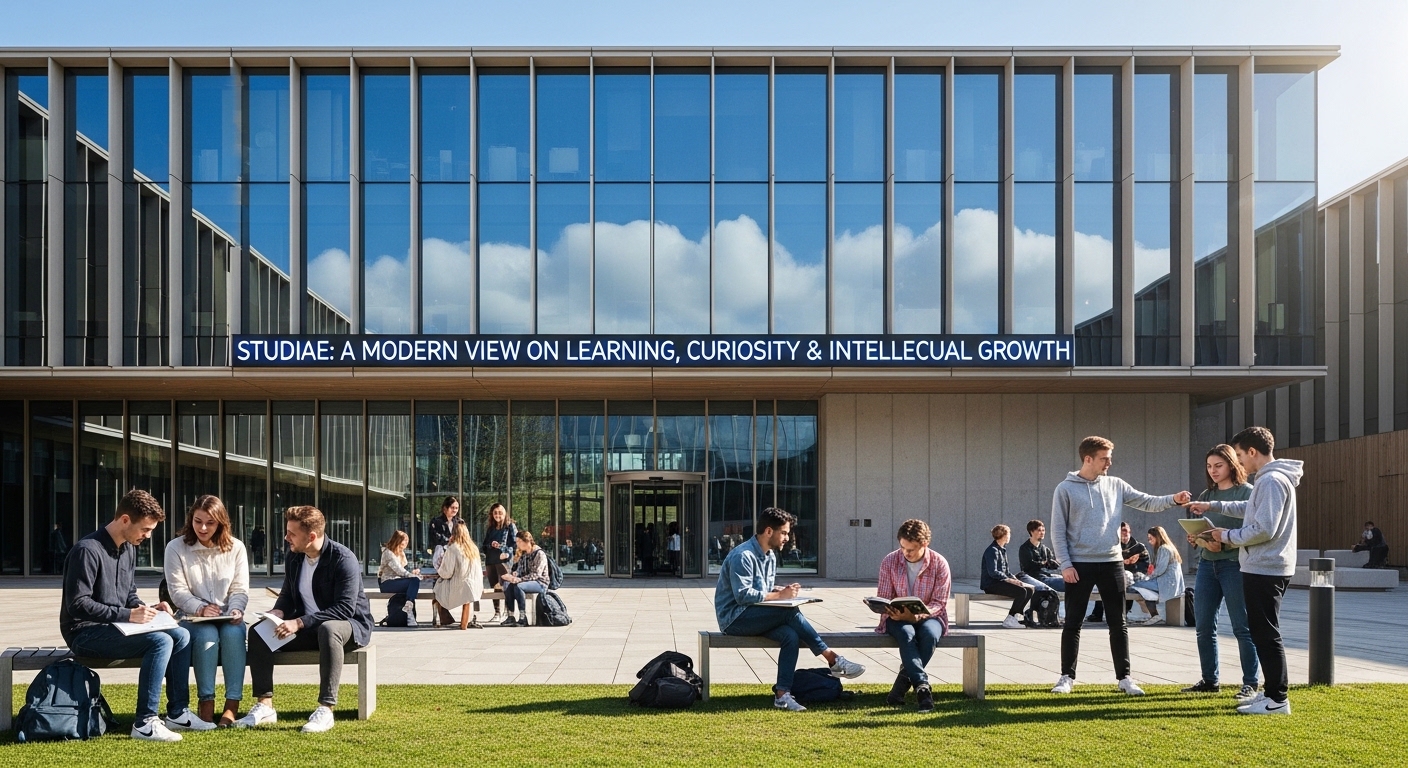
Studiae represents a thoughtful approach to learning that blends curiosity, discipline, and personal growth. In an age where information is abundant and education takes many forms, studiae reflects the deeper motivation behind why people seek knowledge. Rather than focusing only on credentials or outcomes, it emphasizes the process of inquiry, reflection, and continuous improvement. As digital platforms, self-directed education, and lifelong learning gain importance, studiae offers a meaningful framework for understanding how learning shapes individuals and societies.
Studiae as a concept of learning
Studiae can be understood as an attitude toward knowledge rather than a single method of study. It highlights the intention behind learning, encouraging individuals to engage with subjects thoughtfully and consistently.
This concept values depth over speed. Instead of rushing through information, it promotes careful reading, questioning, and synthesis. By doing so, learners develop a stronger connection to what they study and retain understanding more effectively.
The historical roots of studiae
The idea behind studiae has deep historical roots. Throughout history, scholars and thinkers emphasized dedication to learning as a lifelong pursuit. Education was not limited to formal institutions but extended into daily life and personal reflection.
Studiae reflects this tradition by honoring sustained intellectual effort. It connects modern learners to historical practices of scholarship, where patience, discipline, and curiosity were essential qualities.
Studiae and the role of curiosity
Curiosity is central to it. Without genuine interest, learning becomes mechanical and short-lived. Studiae encourages asking questions and exploring topics beyond surface-level understanding.
When curiosity drives learning, individuals are more likely to engage deeply and creatively. It nurtures this curiosity by allowing learners to follow their interests while maintaining focus and structure.
Studiae in modern education systems
Modern education systems often prioritize assessments and performance metrics. Studiae offers a complementary perspective by focusing on intellectual engagement rather than solely on results.
In classrooms that embrace it, students are encouraged to explore ideas, challenge assumptions, and connect knowledge across disciplines. This approach supports critical thinking and long-term understanding rather than memorization.
Studiae and self directed learning
Self directed learning has become increasingly popular due to online resources and flexible education models. Studiae aligns naturally with this trend by emphasizing responsibility and intrinsic motivation.
Learners who adopt it take ownership of their progress. They set goals, reflect on their understanding, and adjust their methods as needed. This autonomy strengthens confidence and resilience.
Studiae in academic research and scholarship
Academic research relies heavily on the principles reflected in studiae. Careful analysis, thorough investigation, and respect for evidence are all part of this mindset.
Researchers guided by it approach their work with integrity and patience. They value the process of discovery as much as the final results, which contributes to higher quality scholarship.
Studiae and interdisciplinary thinking
Complex problems often require knowledge from multiple fields. Studiae supports interdisciplinary thinking by encouraging learners to connect ideas across domains.
This integrative approach allows individuals to see patterns and relationships that might otherwise remain hidden. It fosters adaptability and innovation by breaking down intellectual boundaries.
Studiae and personal development
Learning is not limited to academic achievement. Studiae also plays a role in personal development by shaping habits of thought and reflection.
Through it, individuals develop discipline, focus, and perseverance. These qualities extend beyond learning environments and influence decision making, communication, and self awareness.
Studiae in digital learning environments
Digital learning environments offer vast opportunities and challenges. Studiae provides guidance for navigating these spaces effectively.
With so much information available, learners must choose what to engage with thoughtfully. It encourages intentional selection of resources and critical evaluation of sources, ensuring meaningful learning experiences.
Studiae and the balance between depth and efficiency
Efficiency is often valued in modern education, but it reminds learners of the importance of depth. While efficiency saves time, depth builds understanding.
Studiae does not reject efficiency but integrates it with thoughtful engagement. This balance allows learners to progress steadily while maintaining intellectual integrity.
Challenges in practicing studiae
Practicing studiae requires effort and patience, which can be challenging in fast-paced environments. Distractions and pressure for quick results may undermine deep learning.
Another challenge is maintaining motivation over time. It relies on intrinsic interest, which must be nurtured through reflection and purposeful goal setting.
Strategies for cultivating studiae habits
Cultivating it begins with setting clear intentions for learning. Identifying meaningful goals helps maintain focus and direction.
Regular reflection is also important. By reviewing what has been learned and how understanding has evolved, learners reinforce knowledge and identify areas for growth. Consistent routines support sustained engagement.
Studiae in professional and lifelong learning
Professional environments increasingly value continuous learning. Studiae supports lifelong learning by encouraging curiosity and adaptability.
Professionals who embrace it remain open to new ideas and skills. This mindset enhances career resilience and supports growth in rapidly changing industries.
Studiae and ethical learning practices
Ethical considerations are an important aspect of learning. Studiae promotes honesty, respect for sources, and responsible use of knowledge.
By valuing understanding over shortcuts, it discourages plagiarism and superficial engagement. Ethical learning practices strengthen trust and credibility in academic and professional contexts.
Studiae and cultural perspectives on education
Different cultures approach learning in unique ways. Studiae provides a flexible framework that can adapt to diverse educational traditions.
By emphasizing intention and engagement, it respects cultural differences while promoting shared values of curiosity and intellectual effort. This adaptability makes it relevant in global learning contexts.
The future relevance of studiae
As education continues to evolve, it remains highly relevant. Automation and artificial intelligence increase the importance of human understanding, creativity, and critical thinking.
Studiae supports these qualities by focusing on how people learn rather than what they memorize. Its principles align with future demands for thoughtful and adaptable learners.
Conclusion
Studiae represents a meaningful approach to learning that prioritizes curiosity, depth, and personal growth. It bridges historical traditions of scholarship with modern educational needs.
By embracing it, learners can develop stronger understanding, ethical habits, and lifelong curiosity. In a world of constant change, this philosophy offers stability and purpose in the pursuit of knowledge.