









On a rainy evening in 2019, a small startup founder sat in a café refreshing analytics dashboards that refused to move. The product was solid, the story compelling, yet discovery remained the bottleneck. Social feeds were noisy, search results crowded, and paid promotion felt like shouting into the wind. That moment—shared by countless entrepreneurs and creators—captures the problem space where Findutbes began to matter. Not as a loud solution, but as a deliberate rethink of how ideas, products, and people are actually found online.
In a digital economy obsessed with growth hacks and virality, Findutbes represents a quieter shift: discovery that prioritizes relevance, context, and trust over raw reach. Understanding why that matters—and how it works—offers a useful lens for founders, tech readers, and anyone building in a crowded market.
The Discovery Problem No One Likes to Admit
Digital visibility used to be simpler. Publish something useful, optimize a few keywords, and wait. Today, algorithms mediate nearly every interaction, rewarding velocity and engagement patterns that favor the already-visible. For early-stage companies and independent creators, this creates a paradox: you need attention to grow, but you need growth to earn attention.
Findutbes emerged from this tension. Instead of competing head-on with dominant platforms, it reframed the question. What if discovery could be intent-driven rather than popularity-driven? What if being “found” meant matching the right audience at the right moment, not broadcasting to everyone all the time?
This philosophical pivot is what differentiates Findutbes from many tools that promise visibility but deliver noise.
What Findutbes Actually Does
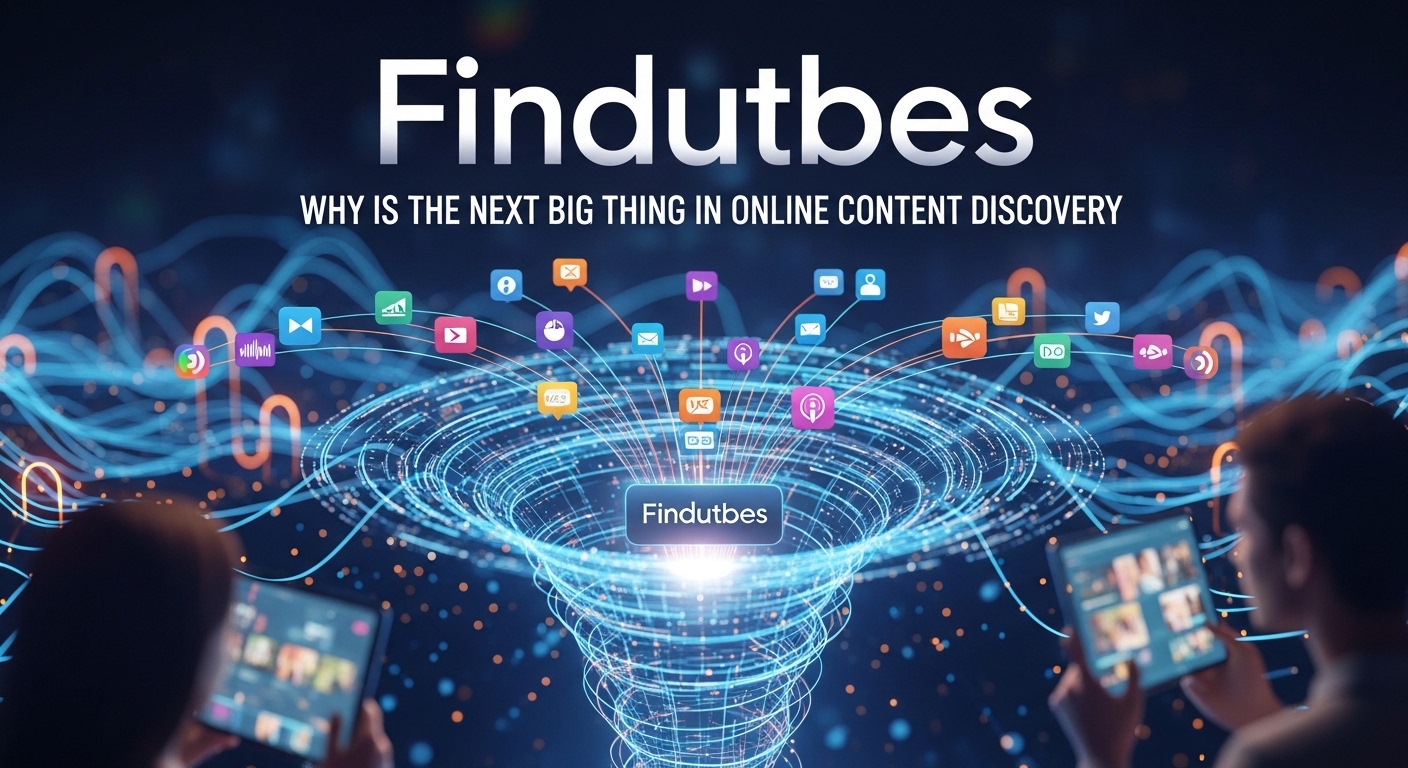
At its core, Findutbes functions as a contextual discovery layer. Rather than ranking content or profiles purely by engagement metrics, it emphasizes semantic relevance, behavioral signals, and curated pathways. For users, that means fewer irrelevant results and more meaningful matches. For builders, it means visibility that compounds rather than spikes and disappears.
The platform’s architecture reflects a broader trend in tech: moving from feed-based consumption to search-and-intent-based interaction. People increasingly want answers, solutions, and connections, not endless scrolling. Findutbes aligns with that shift by organizing discovery around needs rather than trends.
Why Entrepreneurs Are Paying Attention to Findutbes
For entrepreneurs, discovery is not a marketing tactic—it’s an existential requirement. What makes Findutbes compelling in this context is its alignment with how businesses actually grow: through trust, clarity, and consistent value.
Instead of encouraging constant posting or aggressive self-promotion, Findutbes rewards completeness and coherence. A well-defined product description, a clear value proposition, and evidence of real-world use matter more than frequency. This subtly changes founder behavior, pushing them to refine their message instead of amplifying it blindly.
That shift may seem small, but over time it creates healthier ecosystems where quality has a chance to surface.
The Technology Philosophy Behind Findutbes
While Findutbes is often discussed as a platform, it’s better understood as a philosophy implemented through technology. Its systems lean heavily on contextual indexing—mapping relationships between topics, industries, and user intent. This allows discovery to feel less transactional and more conversational.
Importantly, the platform avoids over-automation. Human-in-the-loop curation and feedback mechanisms play a role in refining results, acknowledging that pure algorithmic judgment often misses nuance. In an era where AI-driven platforms dominate, this hybrid approach feels both pragmatic and refreshing.
How Findutbes Fits Into the Modern Tech Stack
For tech readers and founders evaluating tools, integration matters. Findutbes is not designed to replace existing channels like search, social, or email. Instead, it sits alongside them, filling a gap they often leave behind: high-signal discovery.
The table below illustrates where Findutbes typically fits compared to more familiar visibility channels.
| Channel Type | Primary Strength | Primary Limitation | Where Findutbes Differs |
|---|---|---|---|
| Search Engines | High intent, scale | Competitive, slow for new players | Focuses on semantic matching rather than backlinks |
| Social Media Feeds | Fast reach, engagement | Short-lived visibility | Prioritizes long-term relevance |
| Paid Advertising | Immediate exposure | Costly, stops when budget ends | Builds organic, compounding discovery |
| Findutbes | Contextual discovery | Slower initial traction | Rewards clarity and relevance over spend |
This positioning explains why Findutbes often resonates with builders who think long-term and are wary of growth tactics that don’t endure.
Real-World Relevance Beyond Startups
Although entrepreneurs were early adopters, Findutbes has relevance well beyond startup culture. Consultants use it to surface niche expertise. Educators use it to connect with learners actively seeking depth rather than headlines. Even internal teams leverage its discovery model to map knowledge across large organizations.
What these use cases share is a need for meaningful connection rather than mass exposure. In that sense, Findutbes mirrors broader societal fatigue with algorithmic excess. People want fewer, better options—and platforms that respect their time.
The Subtle Economics of Being Found
Visibility has an economic dimension that often goes unexamined. When discovery is scarce and controlled by a few platforms, its price rises. Companies pay more for ads, creators accept unfavorable terms, and innovation concentrates around what the algorithm prefers.
Findutbes disrupts this dynamic quietly. By lowering the cost of being found—measured in both money and attention—it redistributes opportunity. Smaller players gain a path to visibility without bidding wars, while users gain access to alternatives they might never see otherwise.
This isn’t a radical revolution, but it is a meaningful rebalancing.
Challenges and Limitations Worth Acknowledging
No platform is without trade-offs, and Findutbes is no exception. Its emphasis on relevance over immediacy means growth can feel slower, particularly for those accustomed to viral feedback loops. Results accumulate gradually, which requires patience and consistency.
There is also the challenge of education. Because Findutbes doesn’t behave like traditional platforms, new users sometimes misjudge its value early on. Understanding how to present oneself clearly and contextually is a learned skill, not an automatic one. Yet these limitations are arguably features in disguise. They discourage manipulation and reward thoughtful participation.
What Findutbes Signals About the Future of Discovery
Zooming out, Findutbes can be read as a signal rather than just a tool. It suggests that digital discovery is entering a more mature phase—one less obsessed with scale at all costs and more attentive to fit and function.
As AI systems generate more content than ever, the value of curation, context, and intent will only increase. Platforms that help users navigate abundance without overwhelming them will shape the next decade of the web. Findutbes sits comfortably within that emerging paradigm.
Conclusion
The café-bound founder from 2019 eventually found traction, not through louder promotion, but through clearer positioning and better alignment with the right audience. That story is increasingly common, and it explains why platforms like Findutbes matter now.
In a world saturated with signals, being found is less about shouting and more about resonance. Findutbes doesn’t promise instant fame or explosive growth. Instead, it offers something more durable: a way to be discovered for what you actually are, by people who are genuinely looking. For entrepreneurs, tech readers, and founders building for the long term, that may be the most valuable visibility of all.